Why It’s So Hard to Stop Compulsions and What Actually Helps

If you’ve ever tried to “just stop” a compulsion thought or urge, you probably already know:
It doesn’t work.
In fact, sometimes it makes things worse. You can feel like a failure at treatment and lose hope in finding treatment that works.
Some examples of being stuck in a compulsive cycle include:
checking again… and again
replaying something in your mind
criticizing yourself in an effort to control behavior
Feeling stuck in a loop of compulsive behavior can be very time consuming and exhausting. We can find ourselves stuck in an anxiety response longterm.
The Real Problem Isn’t the Thought—It’s the Loop
One helpful way to understand anxiety and OCD is through something called a feedback loop.
Here’s how it works:
A frightening worry shows up (“What if something is wrong?”)
You respond to it (checking, analyzing, avoiding, reassuring)
That response tells your brain:
“This must be important—keep going.”
And just like that, the loop tightens.
In complex systems language, this is called “tight coupling”—where thinking something frightening, feeling scared and then acting on the fear reinforces that the cycle will continue to loop.

Why “Stopping” the Compulsion May Not Work
Most people try to break the loop by force:
“Don’t think about it”
“Just stop checking”
“Ignore it”
But this often feels like trying to stand in front of a speeding train.
The urge doesn’t go away—it may rebound even stronger.
A Different Approach: Don’t Stop—Delay
Instead of trying to stop the loop, what if you just… slowed it down?
This is where something surprisingly simple becomes powerful:
> Introduce a delay between the thought and your response
Why does this help?
Because anxiety and urges don’t stay at the same intensity forever.
Your Nervous System Naturally Calms Down (If You Let It)
Every emotional signal in your body has a kind of “half-life.”
That means:
it spikes
then gradually decreases over time
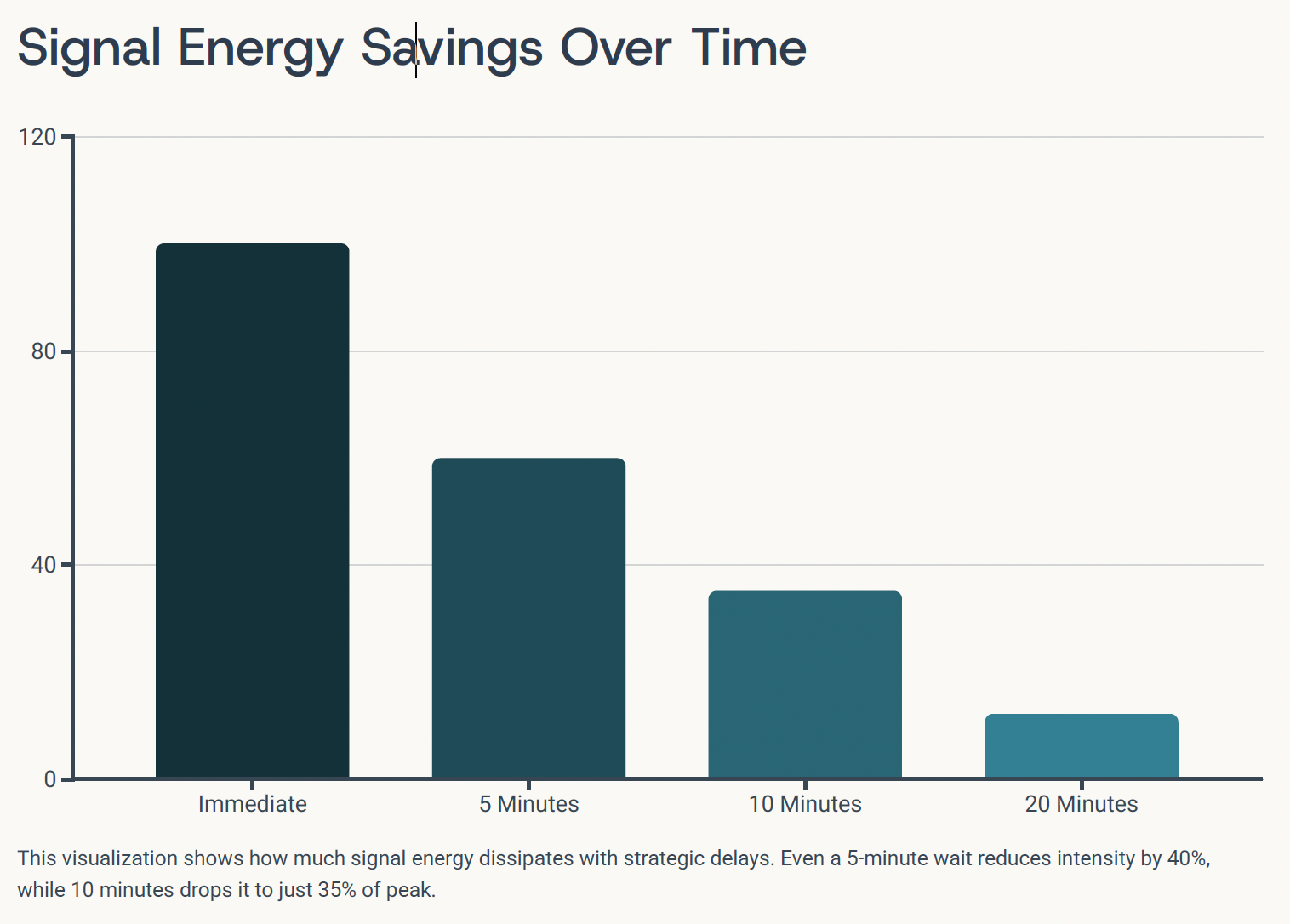
If you act immediately, you’re acting at peak intensity.
But even a short delay changes everything.
acting right away = peak anxiety
waiting even 10 minutes = significantly lower intensity
You’re not forcing yourself to feel better…
>You’re letting your body do what it already knows how to do.
Breaking the Loop (Instead of Feeding It)
When you delay your response, something important happens:
The thought and the action stop being tightly linked
The system “de-synchronizes”
The loop loses energy
This breaks a “phase lock”—when your thoughts, body, and actions are all stuck in emergency mode together.
When you wait, that lock starts to loosen.
A Simple Way to Try This
1. Notice the urge
“This feels urgent. I want to act right now.”
2. Set a timer (start small)
Try 5–10 minutes.
3. Wait and observe
You might notice:
the intensity shifts
the urgency changes
your perspective softens
4. Reassess
After the delay, ask:
> “Do I still need to do this?”
Often, the answer changes.
Why This Works Better Than Fighting Yourself
Delaying is different from resisting.
You’re not:
suppressing the thought
arguing with it
forcing it away
You’re simply changing the timing.
This a “soft intervention”—working with your system instead of against it.

Imagine pushing a swing.
If you push it every time it comes back, it goes higher and higher
If you stop pushing, the motion fades
Anxiety works the same way.
Every time you respond immediately, you’re adding momentum.
When you delay, the system starts to settle on its own like when a swing eventually comes to a stillness when it is not pushed.
You Don’t Have to Get It Perfect
Even if you still act after the delay…
>You’ve already changed the system.
Because:
the intensity is lower
the reinforcement is weaker
the loop is less tightly couples with the original thought
A Different Way to Relate to Anxiety
This approach shifts the question from:
>“How do I make this stop?”
to:
> “Can I give this a little space before I respond?”
That space is where healing starts.
If This Feels Familiar
If you’re noticing patterns like this in your own life—especially with anxiety, OCD, or overthinking—you’re not alone.
And you don’t have to figure it out by yourself.
Working Together
In therapy, we can:
understand the deeper patterns behind these loops
work with the parts of you that feel urgency or fear
build capacity to respond differently (not just react)
If you’re in Utah and looking for support, you can reach out here →